Published: 5 May 2026, 09:34 am
Packing usually feels harder than the actual travel. So many people cram in “just in case” items, forget the things they really need, or end up dragging bags that feel heavier with every step. It’s not about suitcase space—it's about having a strategy.
This guide is here to help you pack smarter for any kind of trip. Whether it’s a quick getaway, a work trip, or that big vacation you’ve been looking forward to, the idea stays the same: pack less, keep things tidy, and bring what you’ll actually use—nothing extra, nothing missing.
Before you throw clothes in a suitcase, ask yourself:
Packing smart starts with your schedule, not your wardrobe. Figure out what you’ll actually be doing day to day.
Packing the night before? Not a great plan. Try giving yourself one or two days to pack. You’ll have time to tweak your list, avoid forgetting things, and wash or buy
anything missing.
Rushed packing always turns into overpacking—or worse, missing essentials.
Skip the “What if I need this?” mindset. Instead, ask:
Think like this and you’ll instantly cut down on what you pack, sometimes by almost half.
Don’t pack separate outfits for every day. Mix, match, and layer. Go for neutral colors that work together. Only pack 2–3 pairs of shoes max, and clothes that dry
quick.
Picture this: instead of five shirts and five pairs of pants, take three shirts and two pants that can mix in different combinations.
Most folks don’t need full-size bottles or their whole bathroom cabinet. Go for travel-sized options, solid bars, and refillable bottles. Grab the basics—anything else
can be picked up once you arrive.
Most people overpack this category, but you really can buy forgotten items anywhere.
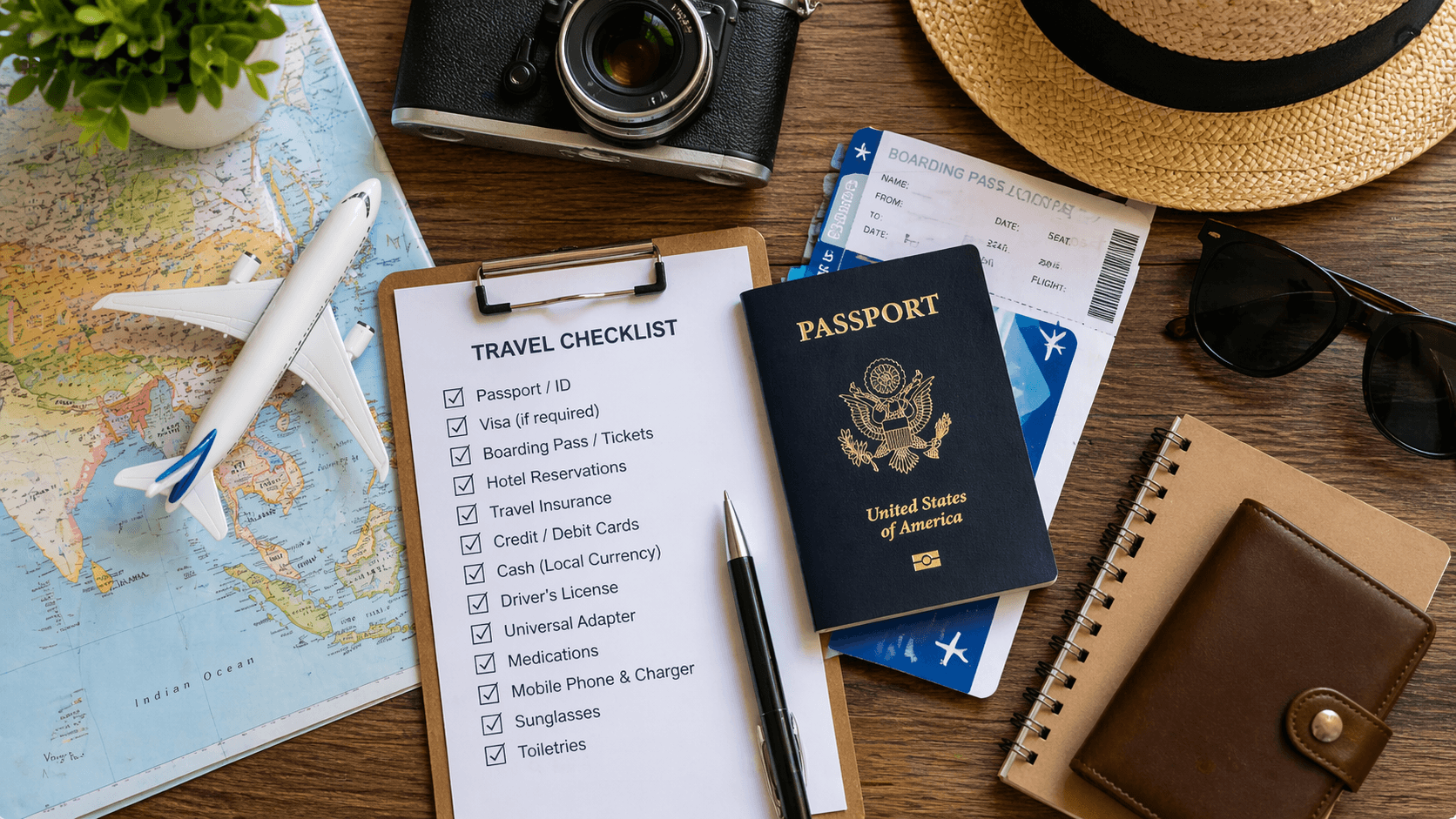
Keep important things in one easy-to-find pouch:
Save digital copies of everything on your phone or cloud storage.
Only bring what you know you’ll use. Usually, that means your phone and charger, a power bank, universal adapter, earphones, and maybe a camera or laptop if
you’ve got work or a specific plan for them.
Otherwise, leave the extra gear at home.
You can skip some toiletries and maybe some clothes—most hotels have laundry, and you might want a nice outfit.
Pack a quick-dry towel, a lock for your stuff, basic toiletries.
Bring a little more comfort: a few extra casual pieces, a reusable cup or utensils, maybe some compact detergent for laundry.
Smart packing means thinking about where you’re going. In some places, modest clothes or sturdy walking shoes are a must.
And here’s a tip—skip the snacks unless you need them for medical reasons. Local food is half the adventure.
Packing smart can save you cash. Lighter bags = no baggage fees, less money wasted on taxis or porters, and fewer last-minute buys.
Quick-dry clothes mean less spent on laundry. It all adds up to a more flexible, budget-friendly trip.
Don’t put all your money and cards in one spot—split them between bags.
Most people come home wondering why they carried so much.
How do I pack smart for any trip?
Think about where you’re going and what you’ll do. Pick clothes and items you can use more than once and limit the extras.
What’s the golden rule of packing?
If you’re unsure about packing something, leave it. You can buy most things if you really need them.
How many clothes do I need for a week?
Usually, 4–5 outfits you can mix up work for a week.
Is it better to overpack or underpack?
Underpack. It’s less stress, cheaper, and way easier.
What should I keep in my carry-on?
Your documents, valuables, meds, phone and charger, and a change of clothes.
Packing smart is more art than science. It’s not about fitting your life into the tiniest bag. It’s about knowing what matters, moving lighter, and actually enjoying your travels instead of worrying about your luggage.
With a little planning and a dose of realism, packing turns from a headache into one of the best parts of your travel routine.