How Can I Have the Best Wildlife Safari in India?
Introduction
Wake up early, head out into the wild, and hope to have that memorable moment - a tiger crossing your path, or elephants moving between trees.
However, many have come back disappointed by seeing nothing more than "a couple of deer and some birds."
There is more than just luck when it comes to spotting wildlife. Many factors play a part, including timing, planning, awareness and some strategy.
In this guide, I share tips from years of field experience to enhance your chances of spotting wildlife on your Indian safari.
An overview of wildlife safari in India
Destination Overview
India
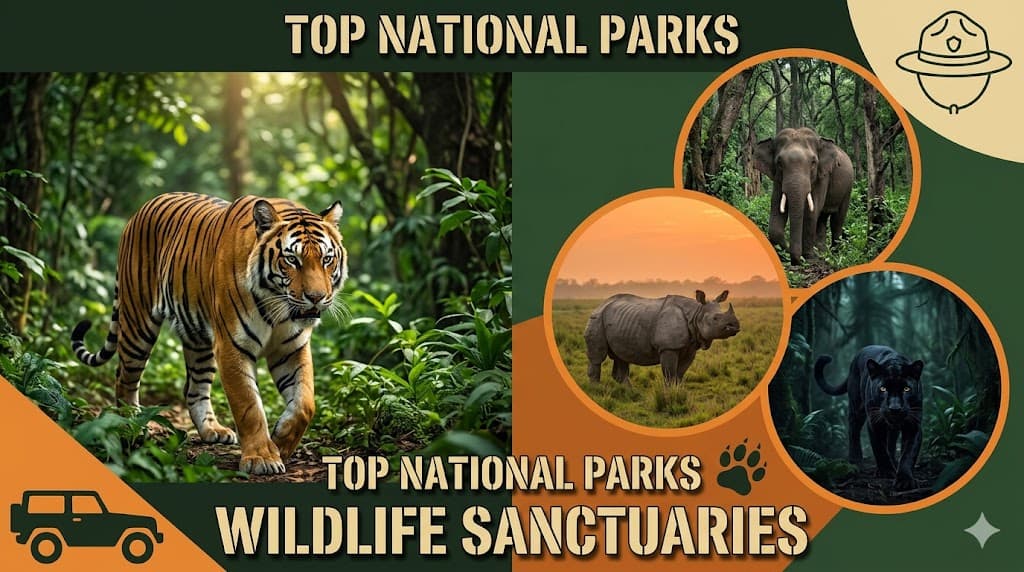
India's many national parks are home to not only tigers, leopards, elephants and rhinos, but also hundreds of species of birds; spotting them however needs time and careful planning.
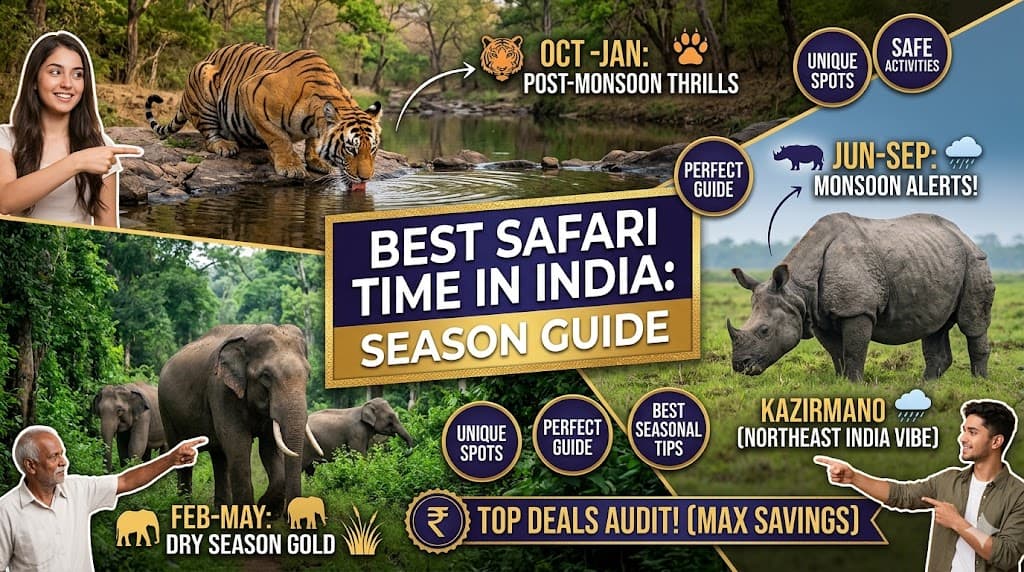
Best time for wildlife sighting
| Time Why It Works |
| Early morning | Animals are active |
| Late afternoon | It's cooler and there will be more movement |
| Summer months | Animals will be at water sources |
How to reach safari zone
- Booking your safari in advance
- Selecting appropriate entry gate/zone
- Arrive early to have the best viewing experience
Top parks for enhanced sightings
- Bandhavgarh National Park
- Ranthambore National Park
- Kanha National Park
- Kaziranga National Park
Best tips for wildlife spotting
1. Selecting the right time for safari
- Morning safaris = most likely viewing times
- Mid-day heat, animals rest
2. Visiting during the right season
- Summer = optimal visibility
- Dry landscape will make for easier viewing
3. Stay quiet and alert
- Avoid loud conversation
- Listen for animals making alert sounds
4. Always obey the instructions of the naturalist
- Naturalists are knowledgeable in identifying animal trails
- Have faith in their capabilities
5. Look for traces and signs as well as the animal itself
- Paw prints
- Recently passed animals droppings
- Alarm calls
6. Keep calm and have patience
- Spotting animals requires time and effort; nothing instant can be assured
7. Select the right zone
- There may be some zones with higher density of animals; try to find out prior to making the reservation
8. Stay away from larger groups in vehicles
- Smaller groups= enhanced viewing experience
- Noise will be reduced
9. Carry proper gear for a safari
- Binoculars
- A camera with an extended range lens
- Natural colors and shades to wear
10. Several safaris should be done
- Increased number of safaris will increase the number of viewing opportunities. Early morning plus evening safaris work best in synergy.
Where you should sleep to ensure that you have the best viewing:
| Type Advantage |
| Near the park gate | Allows easy and early access |
| Into buffer zones | Eliminates extra time in the jeep |
Wildlife viewing experience
- Tiger tracking
- Bird watching
- Viewing elephants
- Nature photography
Food & local customs
A good sample of local dishes available at most eateries located close to parks. Some of the regions will also showcase some unique tribal culture, and others eco-tourism.
Tips on budget
- Make sure to book your safari well in advance
- The expenses for the jeep safari can be shared among multiple people
- Staying outside the park may reduce accommodation costs.
Rules and tips on safety
- Never try standing on the jeep
- Maintain distance from the animals.
- The park regulations must always be followed.
- Do not try making sudden movements.
Sample 3-day wildlife safari plan
Day 1
- Arrive and an evening safari.
Day 2
- Early morning safari and some relaxation in between activities. An evening safari will then follow.
Day 3
- An optional safari on the last day will then lead to departure.
Most common mistakes to be avoided on safari:
- Wishing to guarantee the sighting of wildlife
- Making too much noise while on safari
- Ignoring the naturalists' directions
- Opting for the incorrect time of year
Quick checklist for wildlife spotting
- Book an early morning safari
- Choose the right season
- Be quiet and attentive
- Follow your guide
- Have patience
Frequently Asked Questions (Voice search optimized)
Q1: When is the best time for an Indian safari to view wildlife?
During the early morning and late afternoon, animals are most active and visible.
Q2: Is it possible for me to see a tiger on every safari?
No, sightings are not guaranteed, it depends on many external factors.
Q3: Which is the best season for wildlife safaris in India?
The summer months provide the best visibility.
Q4: How many safaris should be done for an increased chance of wildlife spotting?
An ideal number would be 2-3.
Conclusion
There is no doubt that wildlife safaris are an experience beyond anything you might expect and while the uncertainty is often what makes them exhilarating, with planning, appropriate timing and attentiveness, the chances of seeing wildlife on an Indian safari are significantly boosted.
An Indian safari is also much more than just observing the animals; it is about immersion in the natural world around you, observing the creatures within their own ecosystem, and gaining a new appreciation for nature in its raw and beautiful form.